
Low Volume CNC Machining Bridges the Gap Between Design and Production


Blogpost keywords: low volume CNC machining, prototype CNC machining, small batch machined parts
Low volume CNC machining has become an essential manufacturing solution for companies that need functional prototypes, engineering validation, or limited production quantities without the commitment of expensive production tooling.
At SHD PROTOTYPE, many projects begin with a simple challenge: a design is ready for testing, but the customer is not yet prepared for mass production investment. In these situations, low volume CNC machining provides a practical path that allows engineers to evaluate real-world performance before committing to large-scale manufacturing.
Why Low Volume CNC Machining Is Valuable During Product Development
One of the biggest risks in product development is discovering design issues after production tooling has already been built. Tooling modifications can be expensive and time-consuming. For this reason, many companies choose prototype CNC machining to verify fit, function, assembly compatibility, and structural performance before moving forward.
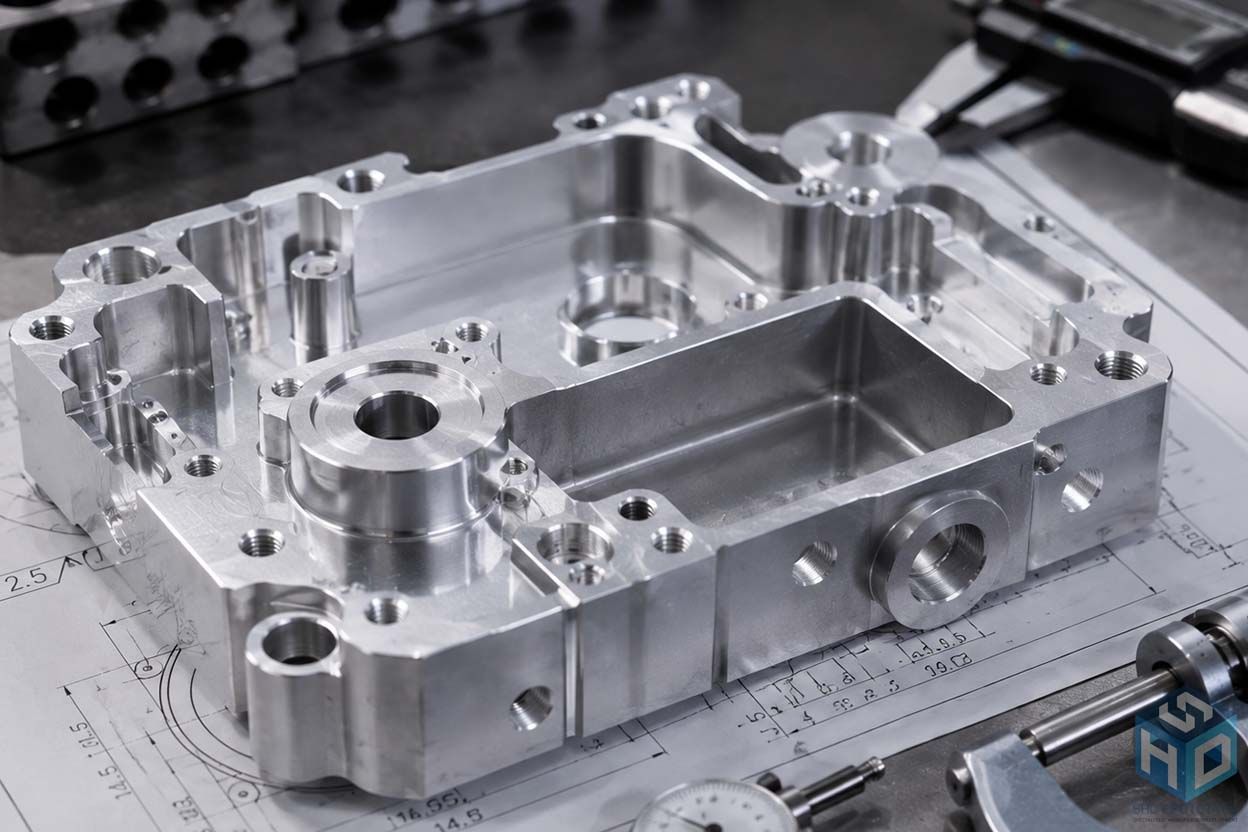
Unlike rapid visual models, CNC-machined prototypes are produced from production-grade materials. Aluminum, stainless steel, brass, engineering plastics, and other materials can be machined to closely represent the final product. This allows engineering teams to test actual performance rather than relying solely on digital simulations.
At SHD PROTOTYPE, we frequently see customers use prototype CNC machining to evaluate mechanical assemblies, industrial equipment components, robotic systems, and consumer product housings before finalizing production decisions.
The Growing Demand for Small Batch Machined Parts
Product development cycles are becoming shorter across many industries. Instead of immediately launching large production runs, companies often release pilot programs, conduct market testing, or support early customer adoption through small production quantities.
This trend has increased demand for small batch machined parts. For startups and emerging product brands, producing several dozen or several hundred units often makes more financial sense than investing in molds before market validation. Established manufacturers also use small batch machined parts to support spare parts programs, engineering updates, and specialized industrial equipment.
Low volume CNC machining allows production quantities to remain flexible while maintaining excellent dimensional consistency.
Common Misconceptions About CNC Prototype Production
A common misconception is that CNC machining is only suitable for single prototypes. In reality, low volume CNC machining can efficiently support both one-off prototypes and repeatable production runs. Modern machining centers provide high precision and stable quality across multiple batches.
Another misunderstanding is that prototype CNC machining is only useful for appearance evaluation. Most functional testing programs rely on CNC-machined parts because they accurately represent material properties, tolerances, and assembly conditions found in the final product. For many engineering teams, prototype CNC machining serves as the last critical validation stage before production approval.
Practical Considerations Before Ordering CNC Parts
When preparing a project for manufacturing, it is important to define the primary objective of the parts. Some projects prioritize appearance, while others focus on mechanical testing, assembly verification, or field evaluation. These goals influence material selection, surface finishing requirements, and tolerance specifications.
At SHD PROTOTYPE, we encourage customers to share detailed application information early in the process. Understanding how a component will be used often helps identify opportunities to simplify machining strategies and reduce overall development costs.
For projects requiring small batch machined parts, early engineering collaboration can also improve production efficiency and shorten lead times.
Conclusion
Low volume CNC machining offers manufacturers a practical way to validate designs, reduce development risk, and support flexible production through prototype CNC machining and small batch machined parts.
Advancing Product Development with Practical Manufacturing Support
At SHD PROTOTYPE, we provide low volume CNC machining solutions for engineers, startups, and OEM manufacturers seeking reliable prototype CNC machining and small batch machined parts. From early design verification to limited production runs, our team helps transform concepts into functional components with precision and efficiency.