
CNC Tool Change Safety: What Should Operators Check?


CNC tool change safety deserves attention because changing a cutter involves more than simply removing one toolholder and installing another. The spindle, drawbar, pull stud, toolholder, automatic tool changer, and clamping system all work together, and wear or incorrect setup can create both machining problems and safety hazards.
A recently circulated CNC workplace injury case on Chinese social media drew attention to a simple but serious setup risk: leaving measuring equipment inside the machine after alignment work. According to the circulated account, a dial indicator and its magnetic base had not been removed before the machine returned to operation, resulted in a serious injury accident in which a tool retention knob pierced an arm.
The publicly available information about this case is limited, so the exact accident details should not be treated as an official investigation conclusion. The safety lesson, however, is highly relevant to everyday CNC setup work.
CNC Tool Change Safety Starts with the Toolholder and Pull Stud
Before installing a tool, the machine should be placed in the safe operating condition specified by its manufacturer, with spindle motion fully stopped.
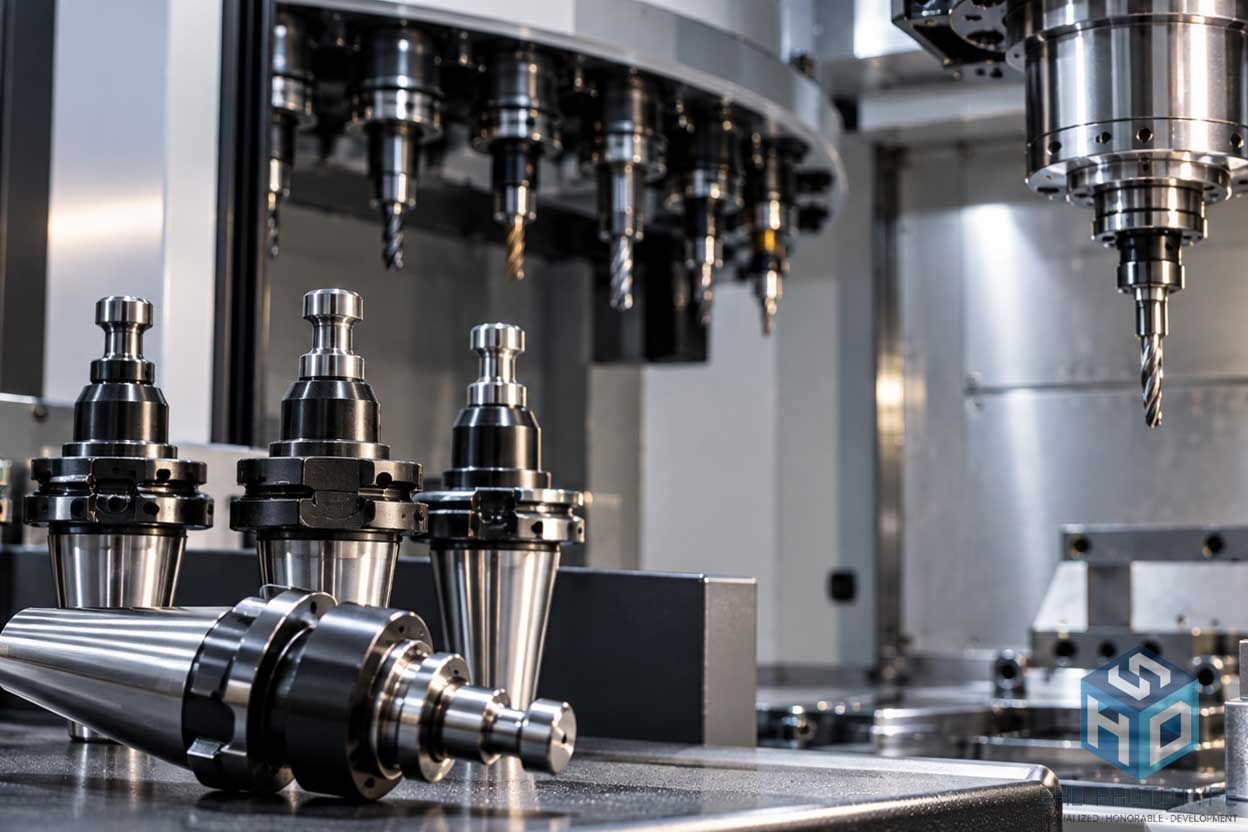
The operator should inspect the toolholder and pull stud before installation. Sspecifically advises users to check toolholders and pull studs regularly and not to use components with incorrect pull-stud types, damage, or contamination between the toolholder and spindle taper. For practical toolholder pull stud inspection, attention should be given to:
- Cracks, deformation, or abnormal wear
- Damaged threads or contact surfaces
- Correct pull stud specification for the spindle
- Chips or dirt on the taper
- Abnormal marks from previous clamping
- Secure cutter installation in the holder
An incompatible pull stud may not engage the spindle clamping mechanism correctly. A damaged component should be replaced rather than modified casually for continued use.
Keep Hands Out of the Tool Change Path
During manual loading, the operator should support the toolholder according to the machine manufacturer's instructions and avoid placing the arm, face, or body directly in a possible release path.
For machines equipped with an automatic tool changer, operators should remain clear while the ATC is moving. If the changer jams or produces an unusual impact sound, production should stop and the approved recovery procedure should be followed instead of reaching into the changer.
Remove the Dial Indicator Before Installing the Cutting Tool
During CNC setup, operators may use a dial indicator with a magnetic base to check workpiece position, fixture alignment, or machine reference surfaces. Because the magnetic base is temporarily attached inside the machining area, it can be easy to overlook once the measurement is complete. Before installing the cutting tool or starting spindle operation, the dial indicator, edge finder, magnetic base, adjustment arms, and any other setup tools must be removed from the machine enclosure.
A tool left inside the working area can become a serious hazard once the spindle, tool changer, or machine axes begin moving. The recent CNC machining accident referenced at the beginning of this article is a reminder of how dangerous a forgotten setup tool can become if it is struck and projected from the machining area.
A simple setup routine can reduce this risk: complete the measurement, remove the dial indicator immediately, confirm that no loose tools remain inside the enclosure, and only then proceed with tool installation and machining. For CNC operators, "measure, remove, check, then run" is a small habit with an important safety purpose.
Check the Tool Before Returning to Production
After replacement, the toolholder should be correctly seated and clamped before machining resumes. For large, heavy, or high-speed tools, operators should also follow the machine manufacturer's restrictions on tool size, balance, speed, and tool-changer configuration. These requirements can vary significantly between machines. Unusual vibration, tool-release noise, repeated clamping alarms, or abnormal toolholder marks should be investigated rather than treated as normal production behavior.
Conclusion
CNC tool change safety depends on equipment condition, correct toolholder selection, pull stud inspection, clean spindle interfaces, safe positioning, and respect for machine guarding.
A few seconds saved by ignoring a damaged pull stud or bypassing an interlock cannot justify the risk of tool ejection, machine damage, or operator injury. Tool changes should always follow the specific machine manufacturer's operating manual and the workshop's approved safety procedure.
CNC Machining Practices at SHD PROTOTYPE
SHD PROTOTYPE supports precision CNC machining projects based on customer drawings, materials, tooling requirements, and critical dimensions. Stable machining depends not only on programming and cutting parameters but also on correct tooling, workholding, equipment condition, and disciplined operating procedures throughout production.
Frequently Asked Questions
-1. Should a worn pull stud be repaired and reused?
A pull stud showing damage or abnormal wear should be evaluated according to the toolholder and machine manufacturer's requirements. Components outside the permitted condition should be replaced rather than casually ground or modified.
-2. What should be done if an automatic tool changer becomes stuck?
The machine should be stopped and the manufacturer's approved ATC recovery procedure followed. Hands should not be placed into the changer mechanism while unexpected movement is possible.
-3. Does tool balance matter during tool changes?
Tool balance becomes particularly important at higher spindle speeds. The required balance grade and speed limitation depend on the toolholder, cutter, spindle, and machine specification.